

Unlocking the signs and symptoms of bipolar disorder to better recognize and manage this mental health condition.
In this comprehensive guide, we dive into the symptoms of bipolar disorder, exploring how signs and symptoms of bipolar manifest in everyday life. We’ll explain why it’s crucial to catch early warning signs and get help, and how this article can empower anyone living with or supporting someone with bipolar disorders.
What Are the Core Symptoms of Bipolar Disorder?
Symptoms of bipolar disorder revolve around alternating depressive episode and manic episode phases. A single mood episode could be debilitating or energizing, with highs and lows that profoundly impact daily life.
During mania, someone may feel euphoric or irritable, sleep less, and engage in risky behavior. Mania can sometimes include psychotic symptoms in severe cases, like hallucinations. Conversely, depressive periods can bring low energy, despair, and suicidal thoughts. Many people with bipolar disorder cycle between manic or hypomanic episodes and depressive episodes, making this mental health condition particularly complex.
Understanding these signs and symptoms of bipolar is critical: identifying a shift early can prevent dangerous escalations and lead to quicker intervention.
Emotional Highs and Lows
Bipolar disorder symptoms typically fall into two categories: manic or hypomanic episodes, and depressive episodes. The main difference between mania and hypomania lies in the severity of the symptoms.
- Mania: Intense elevated mood, inflated self-esteem, racing thoughts, reduced need for sleep, risky behavior.
- Hypomania: Similar to mania but milder and not as disruptive to daily functioning.
- Depression: Prolonged sadness, fatigue, feelings of hopelessness, difficulty concentrating, and sometimes suicidal thoughts.
These extreme mood changes can significantly impact relationships, work, and daily life.
Symptoms of Manic and Hypomanic Episodes
Recognizing the difference between mania vs hypomania is important for identifying the type of bipolar disorder and determining appropriate treatment.
Common manic symptoms:
- Euphoric or irritable mood
- Rapid speech and racing thoughts
- Excessive energy or agitation
- Impulsive decisions (e.g., spending sprees or reckless driving)
- Decreased need for sleep
Emergency signs of bipolar disorder mania psychosis may include hallucinations, delusions, or dangerous behavior. These situations require immediate medical attention.
Common hypomanic symptoms:
- Elevated mood with increased productivity
- Less need for sleep
- More sociable or talkative
- Mild impulsivity
Symptoms of Depressive Episodes
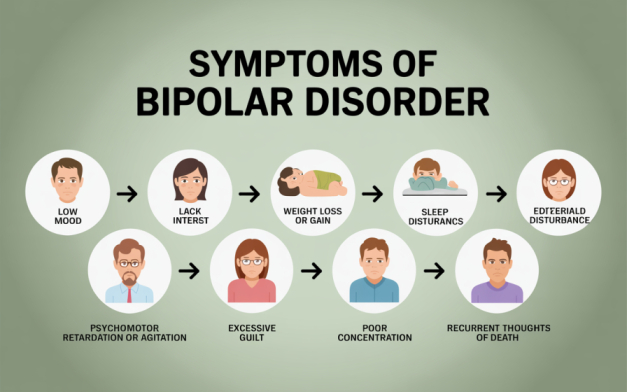
During depressive phases, symptoms can mirror those of major depression and may include:
- Persistent sadness or emptiness
- Loss of interest in usual activities
- Fatigue or lack of energy
- Difficulty making decisions or concentrating
- Changes in appetite or sleep
- Feelings of guilt or worthlessness
- Suicidal thoughts or behavior
Knowing the signs when to see provider for bipolar disorder is key—especially if the depression is severe or persistent. Early intervention can prevent worsening of the condition.
What happens during a manic episode?
A manic episode is characterized by elevated mood, inflated self-esteem, rapid speech, and decreased need for sleep. Manic symptoms often include risky behaviors, impulsivity, and grandiose thoughts. In some cases, individuals may experience psychotic symptoms, which require emergency care.
Mania may last days or weeks, and its severity determines whether someone is diagnosed with bipolar i disorder or bipolar ii disorder. During mania, people with bipolar disorder may spend recklessly, have racing thoughts, or act aggressively. Manic symptoms starkly contrast the hopelessness of a depressive phase, making bipolar disorder unpredictable and challenging.
What happens during a depressive episode?
During a depressive episode, individuals might feel persistently sad, empty, or hopeless. Energy levels plummet, concentration suffers, and even simple tasks feel unmanageable. This is often called a major depressive episode when symptoms reach a certain severity and duration.
Depressive symptoms sometimes include changes in sleep and appetite, feelings of guilt or worthlessness, and even thoughts of self-harm. Importantly, bipolar depression differs from unipolar depression in that it follows or alternates with periods of mania. For people with bipolar disorder, depressive episodes are just one aspect of the broader disorder.
Types of Bipolar Disorder and Their Symptoms
Bipolar I vs Bipolar II
Understanding the distinction between bipolar I and bipolar II can help clarify your symptoms:
- Bipolar I disorder involves at least one full manic episode that may be followed by depressive episodes.
- Bipolar II disorder involves at least one hypomanic episode and one major depressive episode, but never a full manic episode.
Many people wonder, how long does hypomania last in bipolar II? It usually lasts at least four days but less than a week, and is often less disruptive than full mania.
Cyclothymia
Cyclothymic disorder involves frequent shifts between mild hypomanic and depressive symptoms, lasting for at least two years in adults. People often ask, what is cyclothymia vs bipolar disorder? Cyclothymia is less severe but still requires monitoring and sometimes treatment.
What is the difference between Bipolar I Disorder and Bipolar II Disorder?
Bipolar i disorder and bipolar ii disorder differ primarily in the severity of the high phase.
- Bipolar I Disorder involves at least one full manic episode and often includes periods of depression.
- Bipolar II Disorder involves at least one hypomanic episode and one major depressive episode, but no full mania. This milder mania still disrupts life but is less impairing.
People with bipolar ii disorder experience hypomanic symptoms that are less intense but still notable. Hypomania can increase productivity and creativity, but it also precedes depressive episodes. Both types are mental disorders with serious consequences if left untreated.
What is Cyclothymic Disorder and how does it relate?
A cyclothymic disorder is a milder form of bipolar that includes numerous periods of hypomanic and depressive symptoms over at least two years, without meeting full diagnostic criteria for full mania or depression.
People with cyclothymic disorder experience fluctuating mood symptoms that can still impair functioning and quality of life. This disorder often precedes a more severe bipolar disorder, making early recognition key.
What are symptoms and causes of bipolar disorder?
Symptoms and causes both play a crucial role in understanding this complex mental health condition. Symptoms include alternating highs and lows, changes in sleep, energy, and behavior. Causes can involve genetics, brain chemistry, and triggers like stress.
The risk for bipolar disorder is higher if a relative with bipolar disorder has the condition, indicating genetic factors. Biological influences, such as neurotransmitter imbalances, contribute too. Environmental stress can also trigger onset.
How is the disorder diagnosed?
Disorder is diagnosed when a mental health specialist, such as a psychiatrist, identifies criteria from the DSM-V, confirming one or more manic or hypomanic episodes and major depressive episode.
To diagnose bipolar, professionals perform clinical interviews, review mood history, and sometimes use screening questionnaires. Accurate diagnosis enables targeted treatment and avoids misdiagnosis as unipolar depression, which can worsen outcomes.
What treatment for bipolar disorder is available?
An effective treatment for bipolar disorder combines medication, therapy, and lifestyle support.
- Medicines for bipolar disorder include mood stabilizers, antipsychotics, and sometimes antidepressants.
- Psychotherapy, like CBT or family-focused therapy, helps manage emotions, identify triggers, and prevent relapses.
An individualized treatment plan maximizes stability and reduces bipolar episodes. For many, combination therapy is the most effective treatment.
Treatment Options for Bipolar Symptoms
While bipolar disorder cannot be cured, it can be effectively managed with a combination of medication, therapy, and lifestyle changes.
Medication Options
- Mood stabilizers for bipolar disorder, like lithium and valproate, help prevent mood swings.
- Antidepressants and antipsychotics may also be prescribed based on specific symptoms.
Therapy and Counseling
Psychotherapy for bipolar disorder—including cognitive behavioral therapy (CBT) and interpersonal therapy—can help individuals understand their triggers, regulate emotions, and maintain routines.
If you’re researching bipolar treatment options therapy medication lithium, talk to a licensed mental health provider who can tailor a plan that works for you.
When to Seek Professional Help
Recognizing emergency signs of bipolar disorder mania psychosis or severe depression is critical. If you or a loved one experiences:
- Suicidal thoughts
- Hallucinations or delusions
- Inability to care for themselves or others
- Aggressive or dangerous behavior
…seek immediate psychiatric care or emergency services.
Even outside of emergencies, pay attention to signs when to see provider for bipolar disorder, such as:
- Symptoms interfering with work or relationships
- Concerns from family or friends
- Trouble managing medications or mood changes
How can individuals get help with bipolar disorder?
Help with bipolar disorder often starts with consulting a mental health professional who can assess symptoms and design a care strategy. Mental health services may include outpatient clinics, teletherapy, or hospitalization for severe symptoms.
People with bipolar disorder can benefit from education, peer support groups, and regular check-ins with their mental health specialist. Awareness and early action can help manage your symptoms and enable long-term recovery.
Living with Bipolar Disorder
With the right support system, treatment plan, and education, many people with bipolar disorder live fulfilling, productive lives. Building a strong routine, managing stress, and staying connected to care providers can all help reduce the frequency and severity of mood episodes.
Take the First Step Toward Mental Wellness
If you’re experiencing any symptoms of bipolar disorder or are concerned about a loved one, don’t wait. Reach out to a mental health professional for evaluation and support. Whether it’s through therapy, medication, or lifestyle changes, bipolar disorder treatment is available—and effective.
Early recognition of bipolar disorder symptoms could make all the difference. You don’t have to navigate this journey alone.
FAQs About Bipolar Disorder Symptoms
Can bipolar symptoms appear suddenly?
Yes. A person may seem fine one day and then experience a sudden mood shift, especially into mania or depression.
How long do bipolar episodes typically last?
Episodes can last days, weeks, or even months. Manic episodes usually last at least 7 days (or require hospitalization), while depressive episodes typically last 2 weeks or more.
How long hypomania lasts in bipolar II?
Typically a few days.
Are the symptoms different in teens or children?
Yes. Children and teens may display more irritability, aggression, or behavioral problems rather than mood changes alone.
Can bipolar disorder cause irritability or anger?
Yes. Both manic and depressive episodes can cause irritability. In mania, irritability may stem from feeling overly stimulated or misunderstood, while in depression, it may stem from frustration or low self-worth.
What triggers bipolar symptoms?
Common triggers include stress, lack of sleep, substance use, major life changes, or stopping medication. Some people also experience seasonal changes as a trigger.
Can bipolar disorder be mistaken for depression or anxiety?
Yes. Bipolar disorder is often misdiagnosed as depression, especially if manic symptoms are subtle or not reported. Anxiety disorders can also co-occur or mask bipolar symptoms.
Are there physical symptoms associated with bipolar disorder?
Yes. These can include fatigue, changes in sleep and appetite, weight fluctuations, and psychosomatic symptoms like headaches or stomach issues during depressive phases.
Is psychosis a symptom of bipolar disorder?
Psychotic symptoms, such as hallucinations or delusions, can occur during severe manic or depressive episodes, particularly in Bipolar I Disorder.
Can bipolar disorder affect concentration or memory?
Yes. Cognitive symptoms like poor concentration, memory issues, and indecisiveness are common in both manic and depressive episodes.
How do bipolar symptoms differ in men and women?
Women are more likely to experience rapid cycling and depressive episodes, while men may have more manic episodes and may be diagnosed earlier. Both genders can experience severe symptoms.
Can bipolar disorder symptoms come and go suddenly?
Yes. Some people experience rapid mood swings or “rapid cycling,” defined as four or more episodes of mania or depression in a year. In ultra-rapid cycling, changes can occur weekly or even daily.
Do people with bipolar disorder know when they are symptomatic?
Not always. Some people lack insight during manic episodes and may not realize their behavior is unusual or problematic until after the episode.
How can I tell the difference between mood swings and bipolar disorder?
Mood swings in bipolar disorder are more extreme, last longer, and interfere with daily life. They often follow a pattern and are not just brief changes in mood.
Is excessive spending or risky behavior a symptom of bipolar disorder?
Yes. These behaviors are common during manic episodes when judgment is impaired, and impulsivity increases.
When should someone seek help for bipolar disorder symptoms?
If mood changes are severe, persistent, interfere with work or relationships, or involve suicidal thoughts, it’s important to seek professional help. Early treatment improves long-term outcomes.